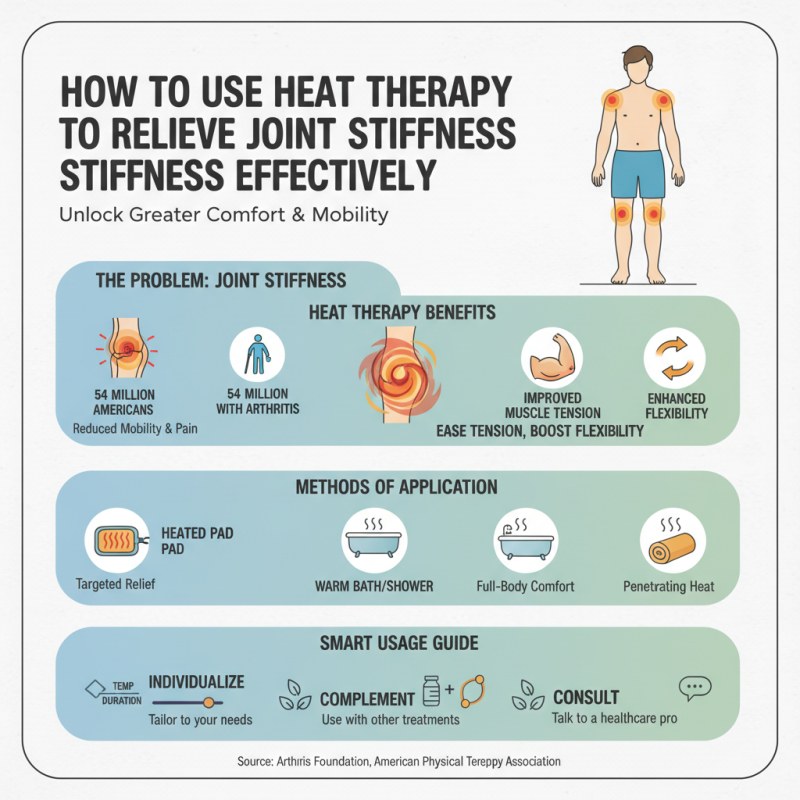
Heat therapy is a valuable tool for those suffering from joint stiffness. According to a study published by the Arthritis Foundation, about 54 million adults in the U.S. experience arthritis. This condition often leads to pain and reduced mobility. Heat therapy can provide significant relief by improving blood flow and reducing muscle tension. Knowing how to use heat therapy for joint stiffness can empower individuals to manage their symptoms effectively.
Research indicates that applying heat to affected joints can enhance flexibility and reduce discomfort. A heated pad or warm bath can help ease the tension around stiff joints. The American Physical Therapy Association endorses heat therapy as part of a comprehensive pain management strategy. However, it's important to recognize that heat therapy is not a one-size-fits-all solution. Some individuals may experience minimal relief or even discomfort from certain heat applications.
Understanding how to use heat therapy for joint stiffness requires an individualized approach. Temperature intensity, duration of use, and the specific body area must be tailored to personal needs. While heat therapy can be beneficial, it should complement other treatments. Always consider consulting a healthcare professional before starting any new therapy. This ensures a safe and effective approach to managing joint stiffness.
Understanding Joint Stiffness and Its Causes
Joint stiffness is a common issue, especially as we age. It can result from various causes, such as arthritis, inflammation, and prolonged inactivity. Recognizing these factors is crucial for effective treatment. When joints become stiff, even simple movements can feel challenging. Understanding the underlying reason for stiffness can help tailor interventions that target the root cause.
Heat therapy is a popular method for easing joint stiffness. Applying heat to affected areas improves blood flow and relaxes tight muscles. You can use warm towels, heating pads, or warm baths. This method not only provides relief but also enhances flexibility.
Tip: Always test the temperature before applying heat to avoid burns.
Regular stretching and gentle exercises can further help in managing stiffness effectively. Incorporating a consistent routine can lead to better mobility and reduced discomfort.
Tip: Listen to your body. If a stretch feels painful, stop immediately.
Hydration also plays a role in joint health. Drinking enough water keeps the cartilage lubricated, reducing friction during movement. Remember, while heat therapy can help, it may not be suitable for everyone. Consult a healthcare provider for personalized advice.
Exploring Different Types of Heat Therapy for Pain Relief
Heat therapy offers various methods to relieve joint stiffness effectively.
Applying heat can enhance circulation and relax muscles, providing significant relief. According to the American College of Rheumatology, nearly 40% of people with arthritis experience stiffness that can improve with heat application.
Different types of heat therapy include moist heat and dry heat. Moist heat, such as warm towels or heated pads, can penetrate deeper into tissues. In contrast, dry heat, like heating blankets or hot water bottles, is often more accessible.
A study published in the Journal of Pain Research highlighted that consistent use of heat therapy significantly reduced pain levels in patients with osteoarthritis.
While heat therapy is generally safe, overuse can lead to burns or increased inflammation. It's vital to listen to your body. A balanced approach to heat application allows for effective relief while minimizing discomfort.
Remember, understanding your specific needs is crucial to your treatment plan.
How to Properly Apply Heat Therapy Techniques
Heat therapy can be a valuable tool for relieving joint stiffness. Proper application techniques are key to achieving the best results. Start with a warm towel. Soak it in hot water, wring it out, and place it directly on the stiff joint. This method allows for deep penetration of heat, which can help relax muscles and improve blood circulation.
Another effective technique is using a heating pad. Set it to a comfortable temperature and apply it for 15 to 20 minutes. Always ensure that the pad is not too hot to avoid burns. Pay attention to your body’s signals. If you feel discomfort, remove the heat source. You might try a warm bath as well. Immerse your joints in water that is comfortably warm. This can provide overall relaxation and may ease stiffness.
Finally, consider how often you apply heat therapy. It can be part of your daily routine, but moderation is important. Overusing heat can lead to irritation or inflammation. Regularly assess how your joints feel after each session. Reflect on the effectiveness of the method you chose. This awareness can guide you to adjust techniques for better results.
Effectiveness of Heat Therapy Techniques for Joint Stiffness Relief
This bar chart illustrates the effectiveness ratings of various heat therapy techniques used to alleviate joint stiffness. Each technique has been rated on a scale of 1 to 10, highlighting how users perceive their success in providing relief.
Timing and Frequency: Optimizing Heat Therapy Sessions
Timing and frequency are crucial when it comes to optimizing heat therapy for joint stiffness.
Applying heat at the right moment can enhance its effectiveness. For instance, using heat after exercise can soothe sore joints.
Conversely, applying heat before physical activity may help loosen stiff muscles.
Understanding your body's signals is key. Pay attention to how long you sit or stand.
Adjust your heat therapy sessions accordingly.
Typically, sessions of 15 to 20 minutes are ideal for most individuals.
However, some may require longer exposure. It's important to monitor your comfort level during each session.
Overuse can lead to skin irritation or discomfort. Heat should feel soothing, not overwhelming.
Finding the right frequency is a personal experience.
Some may need daily applications, while others may find relief with every other day.
Document your experiences with different timings. Reflecting on what works and what doesn’t can guide you in fine-tuning your routine.
Spontaneously trying new schedules may sometimes yield better results.
Be mindful of your body’s reactions. Adapting your heat therapy approach is often necessary, as joint stiffness can vary day to day.
Listen to yourself—it’s essential for an effective healing journey.
Safety Precautions and Considerations When Using Heat Therapy
When using heat therapy for joint stiffness, safety is essential. Always test the heat source before application. A cloth barrier can prevent burns. Heat pads or warm towels should not directly touch the skin. Limit sessions to 15-20 minutes to avoid overheating.
Individuals with certain conditions must take precautions. Those with diabetes or circulation issues should consult a healthcare professional first. Heat therapy can sometimes worsen swelling, so be cautious after physical activity. Remember, everyone reacts differently. Keep track of how your body feels. If discomfort arises, stop immediately.
Stay informed about proper techniques and signs of potential issues. Reliable sources can offer valuable insights. A mix of personal experience and professional advice is beneficial. Over time, you may want to adjust your approach based on what works for you. Consider exploring cold therapy as an alternative. Balancing both methods can aid in overall joint health.
How to Use Heat Therapy to Relieve Joint Stiffness Effectively? - Safety Precautions and Considerations When Using Heat Therapy
| Method of Heat Therapy |
Duration |
Frequency |
Safety Precautions |
Effectiveness |
| Heating Pad |
15-20 minutes |
2-3 times a day |
Avoid direct skin contact; check temperature |
High |
| Warm Bath |
20-30 minutes |
As needed |
Test water temperature; stay hydrated |
Moderate |
| Hot Towel |
10-15 minutes |
Once or twice a day |
Ensure towel is not too hot; protect skin |
Moderate |
| Warm Compress |
15-20 minutes |
As needed |
Check temperature; avoid prolonged use |
Low to Moderate |
Conclusion
Heat therapy can be an effective method for alleviating joint stiffness, and understanding how to use heat therapy for joint stiffness is crucial for optimal results. This approach begins with recognizing the causes of joint stiffness, which can stem from conditions like arthritis, injury, or prolonged inactivity. Various forms of heat therapy, including moist heat, dry heat, and electrical heating pads, can provide relief by increasing blood flow and promoting muscle relaxation.
To maximize the benefits, it's important to apply heat therapy correctly. Techniques include using warm towels, heating pads, or warm baths, ensuring they are comfortable and safe. Timing and frequency play a significant role, as regular sessions can enhance the therapeutic effects. However, safety precautions must be taken to avoid burns or injuries, especially for those with certain health conditions. By integrating these practices, individuals can effectively leverage heat therapy to manage joint stiffness and improve mobility.

 Syrup Medical