What Factors Affect Heat Therapy Product Performance?

Time:2026-09-20 Author:Henry
0%

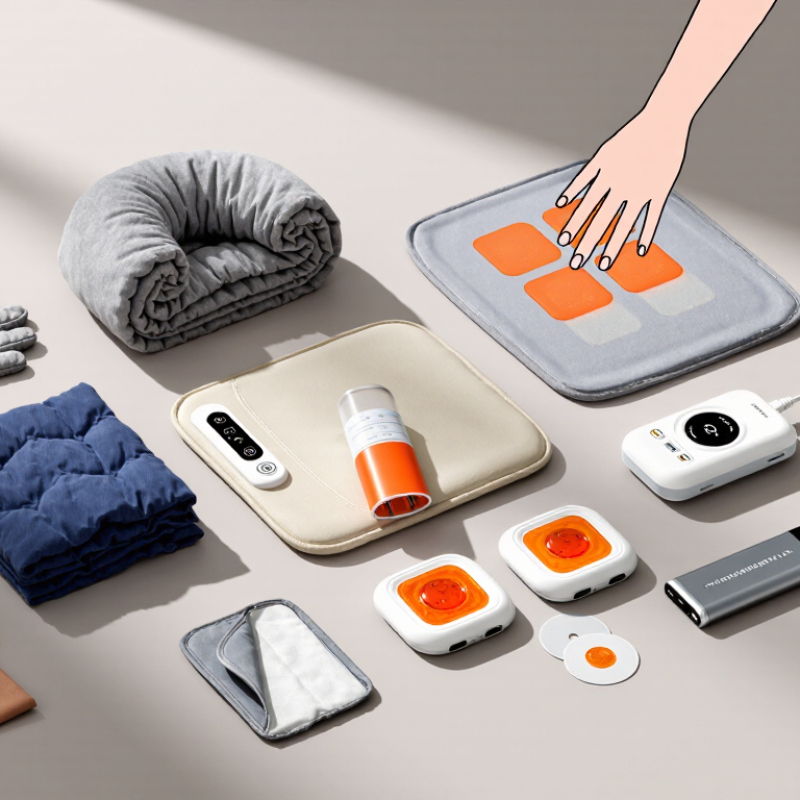
Heat therapy products include heating pads, wraps, blankets, and portable patches. Their performance affects comfort, safety, and treatment consistency. Yet product labels rarely explain every variable clearly. Understanding what factors affect the performance of heat therapy products helps users choose and apply them responsibly.

Temperature control is central. A pad that heats evenly can relax stiff muscles more predictably. Uneven heating may create uncomfortable hot spots. Material thickness, insulation, moisture, and skin contact also change heat transfer. A loose wrap may waste warmth. A tight one may restrict movement or increase pressure. Power sources and battery condition matter for portable devices. A fading battery can reduce temperature before the user notices. That detail is easy to miss.

Design quality matters too. Reliable controllers should maintain stable settings, while timers can reduce accidental overuse. Product testing, clear instructions, and recognized safety certifications provide stronger evidence than attractive packaging. However, performance is not identical for every person. Skin sensitivity, circulation, body size, clothing layers, and treatment location influence perceived warmth. Clinical guidance should shape use when pain is persistent, severe, or unexplained.

Real-world experience reveals limitations. A device may work well on a shoulder but poorly around a curved knee. Some fabrics feel soft yet insulate too heavily. Even careful testing cannot predict every home environment. Users should inspect cords, seams, and surfaces before each session. They should stop if discomfort, excessive redness, or numbness develops. Better questions often produce safer choices.
What Factors Affect Heat Therapy Product Performance?

How Heat Therapy Product Performance Is Evaluated

Heat therapy product performance is evaluated through measurable, repeatable tests. IEC 60335-2-17 addresses safety requirements for household heating appliances, including abnormal operation and temperature control. Test engineers commonly record warm-up time, surface temperature, temperature uniformity, power consumption, and heat retention. Infrared imaging can reveal cold edges or concentrated hot spots. These details matter. A product may feel warm overall but still create uncomfortable pressure points.

Clinical performance requires different evidence. The American College of Physicians recommends superficial heat for some acute or subacute low-back pain cases. A Cochrane review found moderate evidence that heated wraps can provide short-term pain relief, although the evidence was limited for long-term benefits. This distinction is important. A laboratory result cannot prove lasting comfort. Evaluators should also examine fit, moisture, movement, fabric compression, and repeated washing. In practical use, a heating pad may shift during sleep or lose heat near its edges. That is where many evaluations become less realistic. Human testing should record perceived warmth, comfort, skin reactions, and pain scores before and after use. Temperature alone is not enough. One weakness remains: small studies and inconsistent testing conditions can make products appear more effective than they are.

What Factors Affect Heat Therapy Product Performance?

How heat therapy product performance is evaluated using practical, non-brand testing dimensions.

Performance is commonly assessed through warm-up speed, temperature stability, thermal uniformity, operating time, and usable coverage. Lower warm-up time and temperature deviation indicate better performance, while higher operating time and coverage improve practical usability.

Heat Generation and Temperature Control

Heat therapy performance begins with how efficiently a product creates heat. Electrical elements, chemical packs, and heated materials transfer energy differently. A heating element may warm within minutes, while a gel pack often changes temperature more slowly. Surface materials also matter. Thick fabric can soften the heat, but it may delay warming.

Temperature control determines whether warmth feels steady or uncomfortable. A reliable sensor should measure the area near the user’s skin, not only the heating element. Otherwise, the device may display a safe reading while one section feels excessively hot. Feedback controls can reduce power as the target temperature is reached. Good systems also include automatic shutoffs and gradual temperature changes. Small details matter.

Room temperature, air movement, and body contact can alter results. A pad placed loosely may lose heat through gaps. Tight contact can create warmer spots. I have found that heating performance can vary across the same product, especially near seams and edges. This is easy to overlook. Checking the surface with a suitable thermometer can reveal uneven heating, although readings may differ from skin sensation. User instructions should guide temperature, duration, and placement. Personal comfort is not a precise safety measure. Skin sensitivity, reduced circulation, and poor temperature awareness may require professional advice before use.

What Factors Affect Heat Therapy Product Performance? - Heat Generation and Temperature Control
Performance Factor Typical Engineering Range or Condition Effect on Heat Generation Effect on Temperature Control Overall Influence Practical Design Considerations
Heating Element Power Approximately 5–100 W, depending on product size and application Higher electrical power generally increases warm-up speed and the maximum available heat output. Excessive power can create temperature overshoot if the control system does not reduce or interrupt power quickly. High Power should be matched to the heated area, insulation level, intended operating temperature, and contact with the body.
Heating Element Type Resistive wire, printed resistive film, carbon-based element, or fluid-based heating system Element construction affects heat distribution, warm-up time, flexibility, and the ability to create localized heating zones. Elements with uniform resistance and distributed placement are generally easier to regulate consistently. High Uniform element spacing helps reduce hot spots and cold zones, especially in wraps, pads, and wearable products.
Operating Temperature Setpoint Common consumer heat-therapy settings are approximately 35–55°C at the product surface A higher setpoint requires more energy and may lengthen the time needed to reach thermal equilibrium. The controller must maintain the selected temperature without excessive fluctuation or overshoot. High Actual skin-contact temperature can differ from the internal element temperature, so surface measurement is important.
Warm-Up Time Often about 2–15 minutes, depending on power, thermal mass, and insulation Higher power and lower thermal mass generally shorten the time required to reach the target temperature. A gradual ramp can reduce overshoot and improve user comfort during start-up. Medium Warm-up performance should be evaluated under realistic contact and covering conditions rather than in open air only.
Thermal Mass Determined by the mass and heat capacity of fabrics, gels, ceramics, metals, or fluids High thermal mass absorbs more energy before becoming warm and therefore increases warm-up time. Once heated, high thermal mass can reduce short-term temperature fluctuations and extend heat retention after power reduction. High Thermal mass should be balanced against portability, flexibility, warm-up requirements, and battery capacity.
Heat Distribution and Element Spacing Uniform coverage is preferred; local spacing depends on element design and product geometry Uneven spacing can produce concentrated hot areas even when total power is within the intended range. Multiple sensing points or well-distributed elements improve control across the entire treatment area. High Thermal mapping should be performed across the full contact surface, including edges, seams, folds, and bends.
Temperature Sensor Location Sensor may be positioned near the heating element, surface layer, or user-contact layer Sensor placement does not directly create heat but determines how accurately the system detects the delivered temperature. A sensor located too far from the contact surface may allow the skin-facing layer to become hotter than the displayed temperature. High Surface-proximate sensing and calibration under load provide more representative temperature readings.
Control Algorithm and Switching Response On/off control, proportional control, pulse-width modulation, or closed-loop digital control Control strategy affects the average power delivered to the heating element. Closed-loop control with appropriate sampling and switching response can reduce oscillation and temperature overshoot. High Control settings should account for sensor lag, thermal inertia, battery voltage changes, and changing contact conditions.
Insulation and Heat Loss Influenced by foam, textiles, air gaps, reflective layers, seams, and exposed surfaces Better insulation directs a greater share of generated heat toward the intended treatment area and reduces energy loss. Reduced heat loss makes the temperature easier to maintain but may increase the risk of overheating if power is not adjusted. High Insulation should be designed for the intended orientation and should not trap excessive heat against the skin.
Ambient Temperature and Airflow Performance can vary substantially between cool, still conditions and warm, moving air Lower ambient temperature and higher airflow increase convective heat loss and can slow warm-up. The controller may need to supply more power in cold conditions to maintain the same surface temperature. Medium Testing should include more than one ambient condition, especially for portable or battery-powered products.
Contact Pressure and Fit Varies with strap tension, body contour, product flexibility, and user movement Firm contact can improve conductive heat transfer to the body, while gaps can reduce delivered heat. Uneven pressure may create localized hot or cool areas that are not fully represented by a single sensor. High Flexible construction, even pressure distribution, and clear fitting instructions improve repeatable performance.
Moisture and Surface Materials Dry fabric, damp fabric, gel layers, skin moisture, and outer coverings have different thermal properties Moisture can increase heat transfer and may change the effective thermal resistance of the contact layer. Changes in moisture can alter the relationship between measured product temperature and perceived skin temperature. Medium Product testing should reflect the recommended use condition and should consider washable or moisture-exposed components.
Power Source Stability AC supply, replaceable batteries, rechargeable batteries, or USB-powered sources Reduced voltage or current availability can lower heating power and extend warm-up time. Stable power enables more consistent temperature regulation; battery depletion may cause output variation. High Battery-powered products benefit from low-voltage monitoring, regulated power delivery, and clear remaining-runtime indications.
Treatment Duration Common sessions may last approximately 15–60 minutes, depending on intended use Longer operation requires sustained heat output and increases total energy consumption. Temperature stability may change as materials warm fully, the battery discharges, or the user changes position. Medium An automatic timer can support consistent sessions and reduce the chance of unintended prolonged heating.
Thermal Cutoff and Fault Detection Independent over-temperature cutoff, sensor-failure detection, timer shutdown, and abnormal-current protection These functions do not improve nominal heat output but prevent uncontrolled energy delivery. Independent protection provides a second layer of temperature control if the primary sensor or controller malfunctions. High Protection circuits should operate independently where practical and should be verified through fault-condition testing.
Note: The ranges shown are general engineering reference values rather than specifications for a particular product. Actual performance depends on construction, intended body area, operating environment, control settings, and user contact conditions.

Product Materials, Structure, and Heat Distribution

Heat therapy performance depends on more than the heating element. Product materials decide how quickly heat moves and how long it stays. NIST reference data place aluminum’s thermal conductivity near 237 W/m·K. Silicone is far lower, often close to 0.2 W/m·K, depending on formulation. Aluminum spreads heat rapidly, while silicone slows transfer and improves surface comfort. Fabric covers add softness, but thick layers can create uneven warming. That trade-off is easy to underestimate.

Structure controls contact, flexibility, and heat retention. A flat heating layer may feel efficient on a table but perform poorly around a shoulder or knee. In bench testing, small air gaps often create cooler zones. Internal spacing, stitched channels, and flexible insulation can improve contact. However, more insulation may trap excessive heat. ISO 13732-1 provides guidance for assessing human contact with hot surfaces, yet real users move, sweat, and adjust the product. Laboratory conditions are cleaner than daily use. That assumption needs questioning.

Tips: Look for evenly spaced heating zones and a soft, stable cover. Ask whether temperature readings were taken across the whole surface, not only at the center. A 2023 review in the Journal of Clinical Medicine reported that therapeutic heat studies commonly used temperatures around 38–40°C, but comfort varies widely. Check the control response, too. A fast setting is not always better. Materials age, wiring shifts, and performance can drift after repeated folding.

Treatment Duration, Application Method, and Body Contact

What Factors Affect Heat Therapy Product Performance?

Treatment Duration, Application Method, and Body Contact

Treatment duration strongly affects how heat therapy feels and performs. A warm compress may relax a stiff shoulder within 10 to 15 minutes. Short sessions often work well. Longer exposure does not always provide better results. It can cause discomfort, excessive sweating, or skin irritation.

I once assumed that stronger heat meant faster relief. That assumption was incomplete. Comfort and consistency usually matter more than intensity.

Application method also changes the outcome. A flexible wrap can follow the curve of a knee more closely than a rigid pad. A towel may spread heat gently, while direct contact can feel more intense. Follow the product instructions and keep the temperature comfortably warm. A thin fabric layer may protect sensitive skin without blocking too much heat. Too many layers can reduce warmth. For larger areas, repositioning the product may improve coverage, but frequent movement can interrupt treatment.

Body contact is equally important. Pressure matters. A pad that barely touches the skin may transfer little heat. Posture can also create gaps around the lower back or neck. Check the skin during use, especially after several minutes. People with reduced sensation should seek professional guidance before using heat therapy.

I have noticed that small adjustments often change the experience more than expected. Recording the duration, position, and skin response can reveal what works. Then adjust carefully.

Environmental and User-Related Performance Factors

What Factors Affect Heat Therapy Product Performance?

Environmental and User-Related Performance Factors

Heat therapy products rarely perform the same way in every setting. Their results depend on temperature, humidity, airflow, and surface contact. A cold room can make warming feel slower. Thick clothing may trap heat, but it can also reduce direct contact. High humidity may make the skin feel warmer without improving deeper comfort. Airflow from a fan can cool exposed areas quickly.

User habits matter just as much. The product should sit evenly against the intended area, without tight folding or gaps. Movement can shift it and create uneven heating. Skin moisture, body size, and personal heat sensitivity also change the experience. Short sessions may feel gentle, while longer sessions can become uncomfortable. Follow the product instructions carefully.

Hands-on checks often reveal small problems. I once assumed weak heating meant poor performance, but loose contact was the real cause. That mistake is easy to repeat. Inspect the surface before use, keep the temperature moderate, and check the skin during a session. Stop if there is burning, unusual redness, numbness, or dizziness. People with reduced sensation, circulation concerns, or relevant medical conditions should seek professional advice before using heat therapy. Never use damaged electrical components or place a heating product over wet skin unless its instructions specifically allow it.

FAQS

How long should a typical heat therapy session last?

A warm compress may relax a stiff shoulder within 10 to 15 minutes. Short sessions often work well. Longer use may cause sweating or skin irritation.

Does stronger heat provide faster relief?

Not always. Comfort and consistency usually matter more than intensity. I once assumed stronger heat worked faster. That assumption was incomplete.

How does application method affect heat transfer?

A flexible wrap can follow a knee’s curve better than a rigid pad. A towel spreads warmth gently, while direct contact feels more intense.

Should fabric be placed between the product and skin?

A thin fabric layer may protect sensitive skin without blocking much warmth. Too many layers can reduce heat noticeably.

Why does body contact matter during heat therapy?

A pad with gaps transfers less heat. Posture can create spaces around the neck or lower back. Small adjustments help.

Can repositioning improve coverage?

Repositioning may warm a larger area more evenly. Frequent movement can interrupt treatment. Move it carefully and maintain comfortable contact.

Which environmental conditions can change performance?

Cold rooms may make warming feel slower. Fans can cool exposed skin quickly. High humidity may feel warmer without improving deeper comfort.

What should users check during a heat therapy session?

Check the skin after several minutes. Stop if burning, unusual redness, numbness, or dizziness appears. The skin gives useful clues.

Who should seek professional advice before using heat therapy?

People with reduced sensation, circulation concerns, or relevant medical conditions should seek guidance first. Careful advice matters.

Conclusion

Understanding what factors affect the performance of heat therapy products is essential for evaluating their safety, comfort, and effectiveness. Performance is typically assessed by examining how quickly the product reaches its intended temperature, how accurately it maintains that temperature, and whether it delivers consistent heat throughout the treatment period. Reliable temperature control helps prevent overheating while supporting a comfortable and predictable experience.

Materials, internal structure, and heat distribution also play important roles. Well-designed products can spread warmth evenly and reduce uncomfortable hot spots. Treatment duration, application method, and the level of contact with the body may influence how efficiently heat is transferred. In addition, room temperature, airflow, clothing, moisture, and individual sensitivity can affect the user’s perception of warmth. Considering these product and user-related conditions provides a more complete understanding of overall heat therapy performance.

Henry

Henry

Henry is a dedicated marketing professional with a profound expertise in the company's offerings. With years of experience in the industry, he possesses an impressive understanding of the market dynamics and consumer behaviors that drive success. Henry is committed to sharing his insights through......